
Gingerbread Nails Disease: Causes, Symptoms & Treatment of Onychomycosis
What is Onychomycosis?
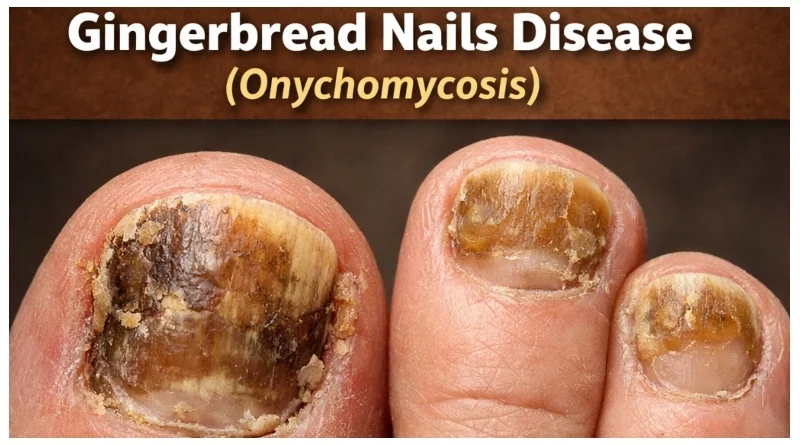
Onychomycosis is a fungal infection that affects the fingernails or toenails. In this condition, the color, shape, and thickness of the nails change. Because of this appearance, some people informally refer to it as “gingerbread nails,” as the nails may look brownish, yellow, and crumbly.
Causes of Onychomycosis
-
Fungal infection (Dermatophytes)
-
Wearing wet or sweaty shoes for a long time
-
Using public swimming pools or bathrooms
-
Weak immune system
-
Diabetes
-
Poor nail hygiene
Symptoms
-
Nails turn yellow, brown, or white
-
Nails become thick and hard
-
Nails may break easily or crumble
-
Bad odor from the nail
-
Nail may separate from the nail bed
Relation to “Gingerbread Nails”
When nails:
-
Become brown in color
-
Have a crumbly or cookie-like texture
-
Appear uneven or damaged
people may casually call this condition “gingerbread nails.” However, the correct medical term is Onychomycosis.
Diagnosis
Doctors diagnose Onychomycosis by:
-
Taking a nail sample
-
Confirming the presence of fungus through laboratory or microscopic tests
Treatment
-
Antifungal nail lacquers or paints
-
Oral antifungal medications (only with a doctor’s prescription)
-
Keeping nails short and clean
-
Avoiding wet or tight shoes
-
Changing socks daily
Prevention
-
Keep nails clean and dry
-
Wear slippers in public places
-
Do not share nail clippers or tools
-
Avoid tight footwear
Conclusion
Onychomycosis is a common but treatable nail disease. If left untreated, it can cause permanent nail damage. That is why some people refer to it as “gingerbread nails disease,” but medically, it is known as a fungal nail infection.
